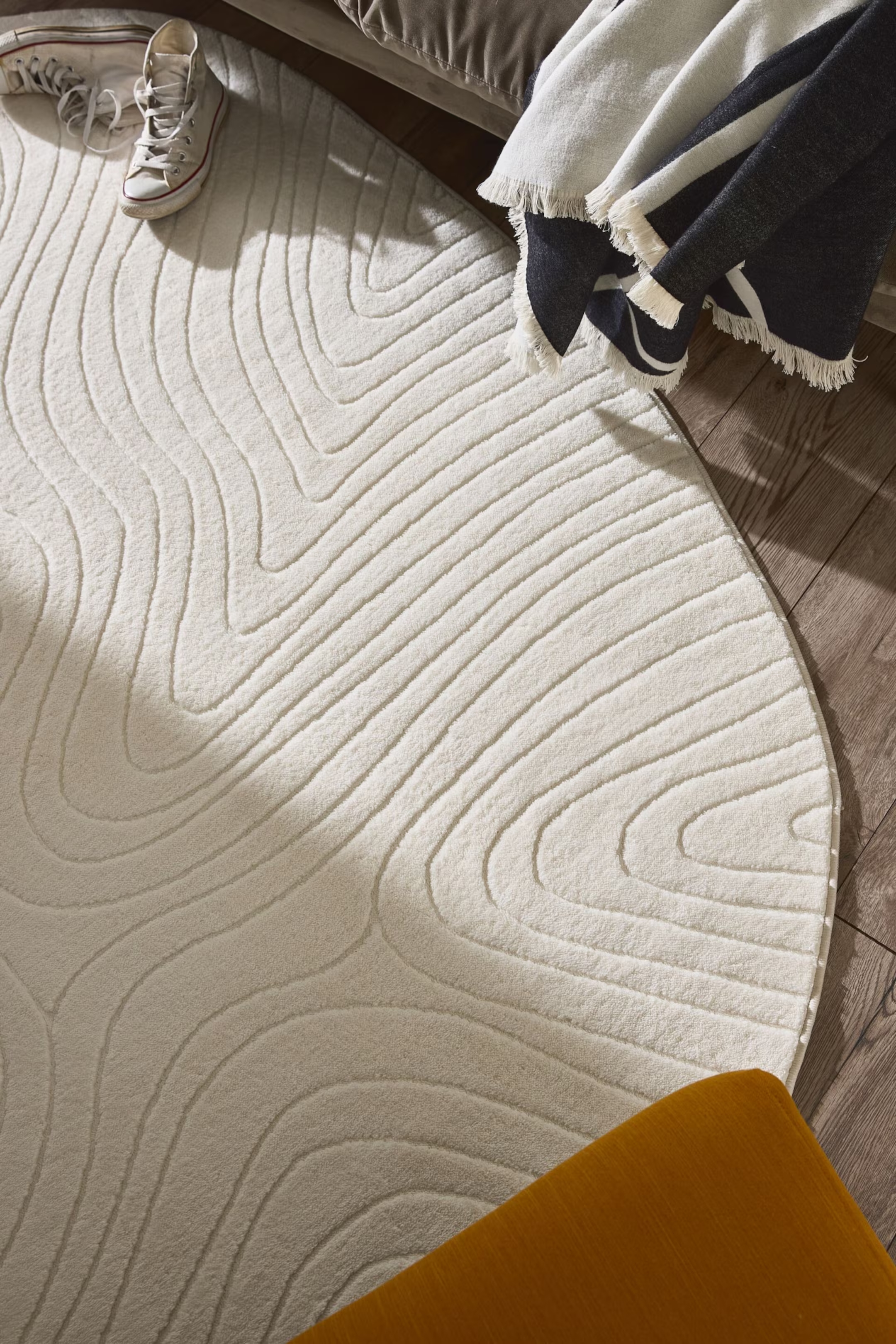
A rug is the most underestimated piece of furniture in a room. It’s not even furniture, technically, and yet it does more work than almost anything else you own. It defines the zone, sets the mood, anchors the furniture, and adds the layer of warmth that makes a space feel finished rather than assembled.
And because of all that, the wrong rug can ruin a room. Not dramatically, not in a way you can point to immediately. But something will feel off, and you’ll spend months rearranging everything else trying to fix it, when the rug was the problem all along.
The good news is that a statement rug on a budget is absolutely possible. You just need to know what you’re buying before you buy it.
1. Size Is the Most Common (and Most Expensive) Mistake
Most people buy a rug that’s too small. It’s the single most common decorating mistake, and it’s the one that immediately makes a room feel unfinished.
So before you look at a single pattern or color, measure your room and work out what size you actually need.
The rules, because they’re genuinely helpful:
- In a living room, the front legs of all your seating should sit on the rug. At minimum, the front legs of the sofa. A rug that only sits in the middle with nothing touching it is floating, and floating rugs make a room feel smaller, not bigger.
- In a dining room, the rug needs to extend at least 60cm beyond the table on all sides so chairs stay on the rug even when pulled out.
- In a bedroom, go for something large enough that your feet land on the rug when you get out of bed. An 8×10 under a queen or a 9×12 under a king is the general guideline.
When in doubt, go one size up. A bigger rug almost always looks better. A rug that’s too small, on the other hand, almost never does.
2. Material Matters More Than You Think
This is where budget rug shopping gets real. Because the truth is, not all rugs are worth spending more on, and not all cheap rugs are a waste of money. It entirely depends on the material and where it’s going.
Here’s the honest breakdown:
Polypropylene (synthetic): Budget-friendly, stain-resistant, and genuinely good for high-traffic areas like hallways, kitchens, and living rooms with kids or pets. It doesn’t feel luxurious underfoot, but it lasts well and cleans easily. If you’re in a rental or you’re not sure about the color yet, this is the sensible choice.
Jute and natural fibers: Beautiful, sustainable, and great for layering. However, they’re not ideal for damp rooms or anywhere that sees a lot of liquid spills. They also shed a little at first, which is completely normal but worth knowing. Great for bedrooms or low-traffic living areas.
Wool: This is where you start spending more, and for good reason. Wool rugs last for decades, feel incredible underfoot, and get better with age. If you find one second-hand or at a sale, it’s almost always worth it. New, they’re an investment rather than a budget buy.
Cotton: Washable, lightweight, and often the most budget-friendly of all. Great for kids’ rooms and bedrooms. Not as durable in high-traffic areas, but the fact that you can put it in the washing machine makes up for a lot.
The budget rule: Match the material to the room’s traffic and your lifestyle, not just what looks pretty in the photo.
3. Pattern Commitment Is Real, But Not Permanent
A statement rug with a bold pattern or a strong color is exactly what makes a room interesting. It’s also, understandably, the thing people are most nervous about.
Here’s the reframe: a rug is not a wall. You can roll it up and move it. If you get it home and hate it, most places have a returns policy, and even if they don’t, a good rug will sell second-hand within a week on any local marketplace.
So go bolder than you think you should. The worst-case scenario is actually very manageable.
That said, there are some things that help you choose a pattern confidently:
- Pull from what’s already in the room. Your rug doesn’t need to match your sofa. But it should pick up at least one color that’s already present, even if it’s in a throw pillow or a piece of art.
- The more pattern in the rug, the less pattern elsewhere. A bold geometric rug works best with solid-colored furniture. A more subtle rug, on the other hand, gives you room to play with patterns on cushions and curtains.
- Textured neutrals are a statement too. A chunky boucle rug in cream or an intricately woven jute in natural tones can be just as much of a statement as a color-blocked one, and considerably easier to live with long-term.
4. Where to Actually Find Budget Statement Rugs
The most important budget tip for rugs: shop the clearance section first, always.
IKEA’s online clearance section regularly has rugs at 50-70% off, often because a colorway is being discontinued. These are not damaged rugs. They’re discontinued rugs, and consequently they’re perfectly good. Check it every few weeks if you’re patient.
Beyond IKEA, here’s where to look:
Second-hand marketplaces (Facebook Marketplace, Vinted, Wallapop in Spain): This is where the genuinely good rugs end up. People sell wool rugs they’ve tired of, Persian-style rugs from their parents’ house, jute rugs in perfect condition from a room they’ve redecorated. A rug that costs 800 euros new often goes for 80-150 second-hand, and it’s already been broken in.
H&M Home: Consistently underrated for budget statement rugs. The quality is not heirloom, but the designs are on-trend and the price point is honest. Good for a room you’re still working out.
Sales at major chains: Zara Home, La Redoute, and similar mid-range shops run significant sales in January and July. If you’re not in a rush, therefore, waiting for a sale on a specific rug can save you 40-50%.
Thrift shops and charity stores: Hit or miss, but when it hits, it really hits. Vintage rugs with a bit of wear often look better than brand-new ones.

5. The Rug Pad: Non-Negotiable
A rug without a pad slides, bunches, wears unevenly, and damages your floor. A rug with a pad stays put, feels softer underfoot, lasts longer, and protects the floor underneath.
A rug pad costs around 20-40 euros and makes a 60-euro rug feel like a 200-euro one. It is, consequently, the best value accessory in home decor and the one most people skip.
Buy the pad at the same time as the rug. Trim it to size if needed. You’ll never go back.
6. Layering: The Styling Trick That Makes Rugs Look Expensive
Layering a smaller rug over a larger base rug is one of the most effective styling tricks in a budget home. It adds depth, texture, and the kind of intentional styling that makes a room look like it was put together by someone who knows what they’re doing.
The base rug is typically a flat-weave or natural fiber rug in a neutral tone. The top rug, on the other hand, is the statement piece: a vintage-style Persian, a bold geometric, a shaggy textured circle.
This approach also means you can invest less in each individual rug because the layered effect does the heavy lifting visually. Two 60-euro rugs layered well will, in most cases, look better than one 120-euro rug sitting alone.
The Quick Reference Before You Buy
Before you click “add to cart” or take it to the checkout, run through this:
- Have I measured the space and confirmed the size will work?
- Does the material make sense for this room’s traffic level?
- Does it pick up at least one color already in the room?
- Have I checked the clearance section and second-hand options first?
- Have I ordered a rug pad at the same time?
If you can say yes to all five, you’re ready. Go get the rug.
Save this guide for your next rug search. And send it to someone who keeps saying their room “just needs something” but can’t figure out what. It’s the rug. It’s almost always the rug.

Category: Home Styling | Budget Decor
Subcategory: Rugs, Living Room, Buying Guides
Tags: statement rugs, budget rugs, how to choose a rug, rug buying guide, area rug tips, rug size guide, rug materials, budget home decor, The Smart Home Edit, home styling on a budget, affordable rugs, rug layering, IKEA rugs, second hand home decor, living room rug ideas

Leave a Reply